Bank & Financial Scam Help for Seniors
Bank fraud help for seniors is critical as scammers increasingly impersonate banks, credit unions, and fraud departments to steal money and personal information. These scams often involve urgent phone calls, text messages, or emails claiming there is suspicious activity on your account.
South Metro Tech Support helps seniors and families verify suspicious bank-related calls, understand what is real versus fraudulent, and secure accounts and devices before further damage occurs.
Call 507-291-3950 Book AppointmentWhy Seniors Are Targeted by Bank & Financial Scams
Seniors are often targeted by bank and financial scams because scammers assume older adults are more trusting, may have stable savings, and are motivated to act quickly to protect their accounts. These scams are carefully designed to sound professional and authoritative, often using familiar bank terminology and realistic scenarios.
Many scam calls succeed because they create fear and urgency. You may be told that your account is under investigation, that fraudulent charges were detected, or that immediate action is required to prevent financial loss. The pressure to act quickly makes it harder to pause and verify the information.
Understanding these tactics is one of the best defenses. Legitimate banks allow time to verify activity and will never pressure you to move money or keep the situation secret. When in doubt, stopping and verifying independently can prevent serious financial damage.
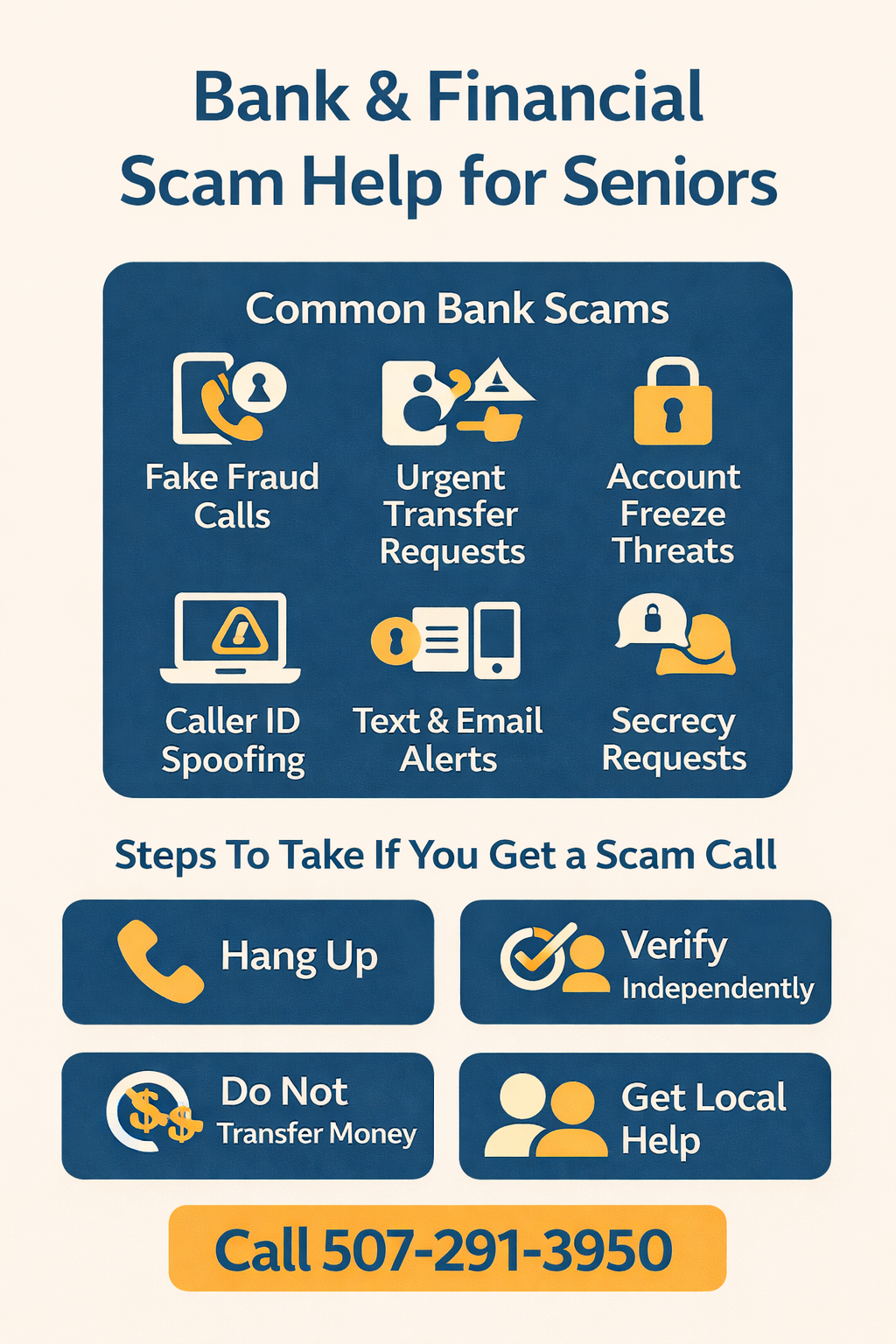
Common Bank & Financial Scams Targeting Seniors
Fake Bank Fraud Calls
Scammers pretend to be your bank’s fraud department and claim your account is compromised.
Urgent Transfer Requests
You’re told to move money to a “safe account” using wire transfers, Zelle, or cash withdrawals.
Account Freeze Threats
Scammers threaten to lock or seize your account if you don’t act immediately.
Caller ID Spoofing
The phone number appears to match your bank, making the call seem legitimate.
Text & Email Fraud Alerts
Fake alerts ask you to click links or call numbers to “verify” suspicious activity.
Requests for Secrecy
You’re told not to speak with family members or bank employees during the call.
What Real Banks Do vs. What Scammers Do
Real Banks
Ask you to verify transactions, freeze cards, or visit a branch — without urgency or secrecy.
Scammers
Demand immediate action, money transfers, and staying on the phone.
Real Banks
Never ask for full passwords, PINs, or verification codes.
Scammers
Request codes, personal information, or remote access to “secure” your account.
What To Do If You Receive a Bank Scam Call
Hang Up
End the call immediately. Do not continue the conversation.
Verify Independently
Call your bank using the number on the back of your card or official website.
Do Not Transfer Money
Banks will never ask you to move money to another account.
Secure Your Devices
If you clicked a link or installed software, your device may need cleanup.
Get Local Help
We can help verify the situation and secure your accounts and devices.
How We Help Seniors With Bank Fraud Protection
Scam Verification
We help determine whether a bank-related call, text, or email is legitimate.
Account Security Support
Password resets, two-step verification setup, and account safety guidance.
Device Safety Checks
Remove remote access tools, suspicious apps, and unsafe browser settings.
Clear Next Steps
Simple, written instructions you can follow and share with family members.
Pricing for Bank Fraud & Scam Help
Most bank fraud and scam-related visits take 45–90 minutes. We focus on securing accounts, cleaning up devices, and preventing repeat scams. No pushy upsells — just clear, honest help.
Disclaimer: South Metro Tech Support provides technical support and device/account security assistance. We do not provide legal or financial recovery services and cannot guarantee recovery of lost funds. If you believe a crime occurred, contact your bank and local authorities.